


Product Description
Grow organoids that more closely resemble native tissue with a matrix formulated for organ-like 3D structures. The phenol red-free formulation keeps imaging backgrounds low while organoids develop.
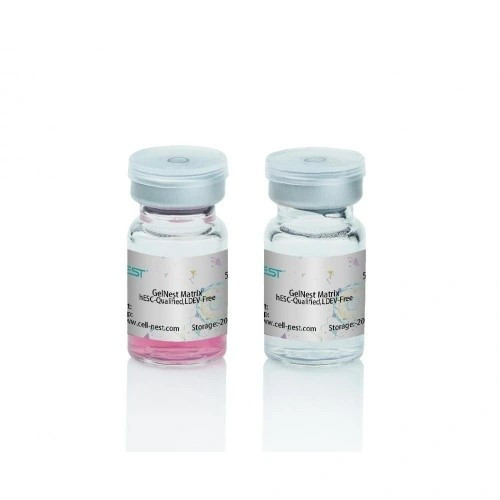
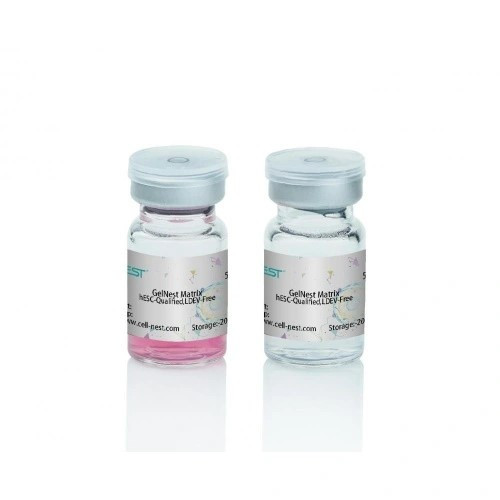
This listing is for NEST catalog number 211282: GelNest Basement Membrane Matrix, for Organoid Culture, Phenol Red-Free, LDEV-Free, 5 mL, Bottle. GelNest Matrix is prepared from basement membrane components extracted from mouse tumor tissue, rich in laminin, type IV collagen and heparan sulfate proteoglycan along with a range of growth factors. It mimics the physiological basement membrane to provide the adhesion, differentiation and proliferation cues cells need. Every lot is LDEV-free and supplied as 5 mL per bottle; keep it frozen and thaw on ice before use. LIGHT LABS stocks the NEST Scientific line and ships quickly from our Englewood, Colorado team.
Key Features
- Native Basement Membrane Proteins – Laminin, type IV collagen and heparan sulfate proteoglycan support cell adhesion
- LDEV-Free – Tested free of lactate dehydrogenase elevating virus
- Organoid Formulation – Intended for growing organ-like 3D structures
- Phenol Red-Free – Lower background for imaging organoids
- Dome-Ready Gel – Forms 3D domes for embedding stem cells and tissue fragments
Specifications
| Catalog Number | 211282 |
| Brand | NEST Scientific |
| Description | GelNest Basement Membrane Matrix, for Organoid Culture, Phenol Red-Free, LDEV-Free, 5 mL |
| Sold As | Bottle |
| Formulation | Organoid culture |
| Phenol Red | No (phenol red-free) |
| Units per Pack | 1 bottle |
| Units per Case | 1 bottle (5 mL) |
| Source | Basement membrane extract from mouse tumor tissue |
| Main Components | Laminin, type IV collagen, heparan sulfate proteoglycan, growth factors |
| Viral Testing | LDEV-free |
| Volume | 5 mL per bottle |
| Storage | Frozen; thaw on ice to avoid premature gelling |
Applications
- Intestinal, liver and other organoid culture
- Patient-derived organoid models
- Disease modeling and drug screening
- 3D imaging of organoids