


Product Description
Measuring how well a sequencing pipeline detects rare taxa requires a reference with very uneven, precisely known abundances. This Zymo Research DNA standard supplies exactly that, offering a log-distributed genomic DNA mix that lets labs evaluate sensitivity and quantitative accuracy from library prep onward. It is a practical companion to cellular mock communities.
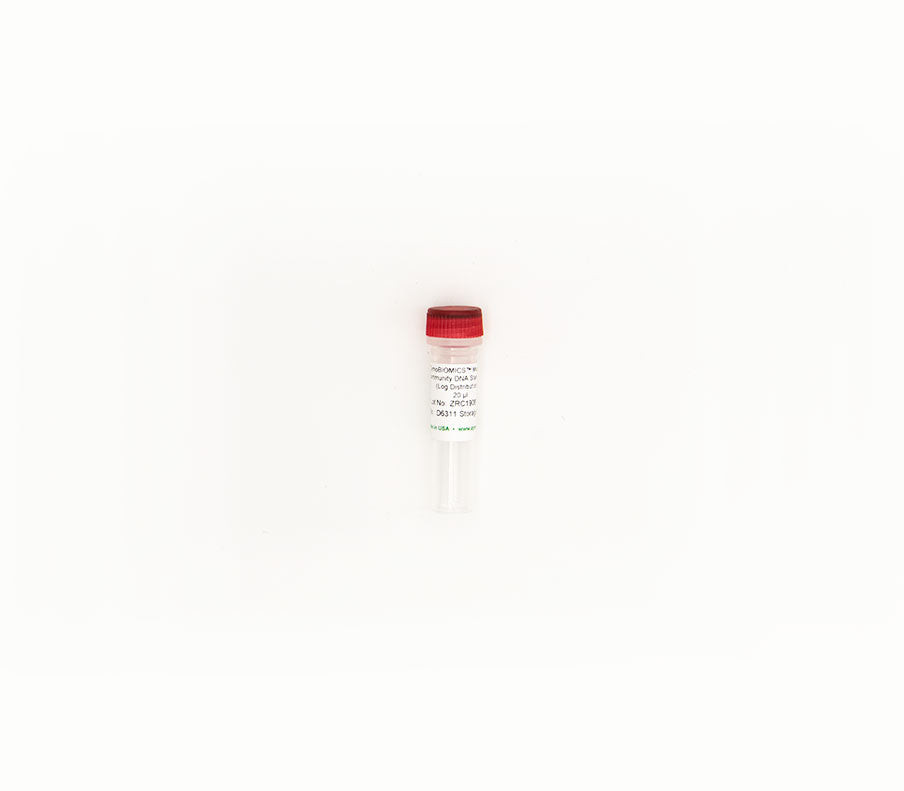
This listing is for catalog number D6311: ZymoBIOMICS Microbial Community DNA Standard II, Log Distribution. It is built by quantifying genomic DNA from pure cultures of eight bacteria and two fungi, pooling them at log-stepped ratios and confirming the final composition by NGS. Impurity is below 0.01%. Because the DNA is already extracted, the standard isolates library preparation, sequencing and analysis performance, and it works well as a routine QC positive control. Add it to your LIGHT LABS order and keep your bench stocked.
Key Features
- Log-stepped composition – Abundances range from 89.1% down to 0.000089%.
- NGS-verified – Composition is confirmed by sequencing after pooling.
- Very low impurity – Contains less than 0.01% contaminating DNA.
- Post-extraction control – Focuses on library prep, sequencing and bioinformatics steps.
- Bacteria and fungi – Combines eight bacterial and two fungal genomes.
Specifications
| Catalog Number | D6311 |
| Brand | Zymo Research |
| Description | ZymoBIOMICS Microbial Community DNA Standard II, Log Distribution |
| Format | Pooled genomic DNA |
| Organisms | 8 bacteria and 2 fungi |
| Impurity | < 0.01% |
| Verification | Composition confirmed by NGS |
| Theoretical composition (gDNA) | L. monocytogenes 89.1%, P. aeruginosa 8.9%, B. subtilis 0.89%, S. cerevisiae 0.89%, E. coli 0.089%, S. enterica 0.089%, L. fermentum 0.0089%, E. faecalis 0.00089%, C. neoformans 0.00089%, S. aureus 0.000089% |
| Shipping Conditions | Ships at room temperature |
| Storage | -80°C |
Applications
- Sequencing sensitivity assessment
- Library prep validation
- Bioinformatics benchmarking
- Routine QC positive control
- Rare taxa detection studies