




Product Description
Low-biomass samples such as blood, tissue or swabs leave little room for error in microbiome quantification. This Zymo Research spike-in control is built for those situations, adding a known in-sample reference that supports absolute cell number estimates and pathogen load measurements by sequencing. It is intended for samples where microbial DNA is scarce.
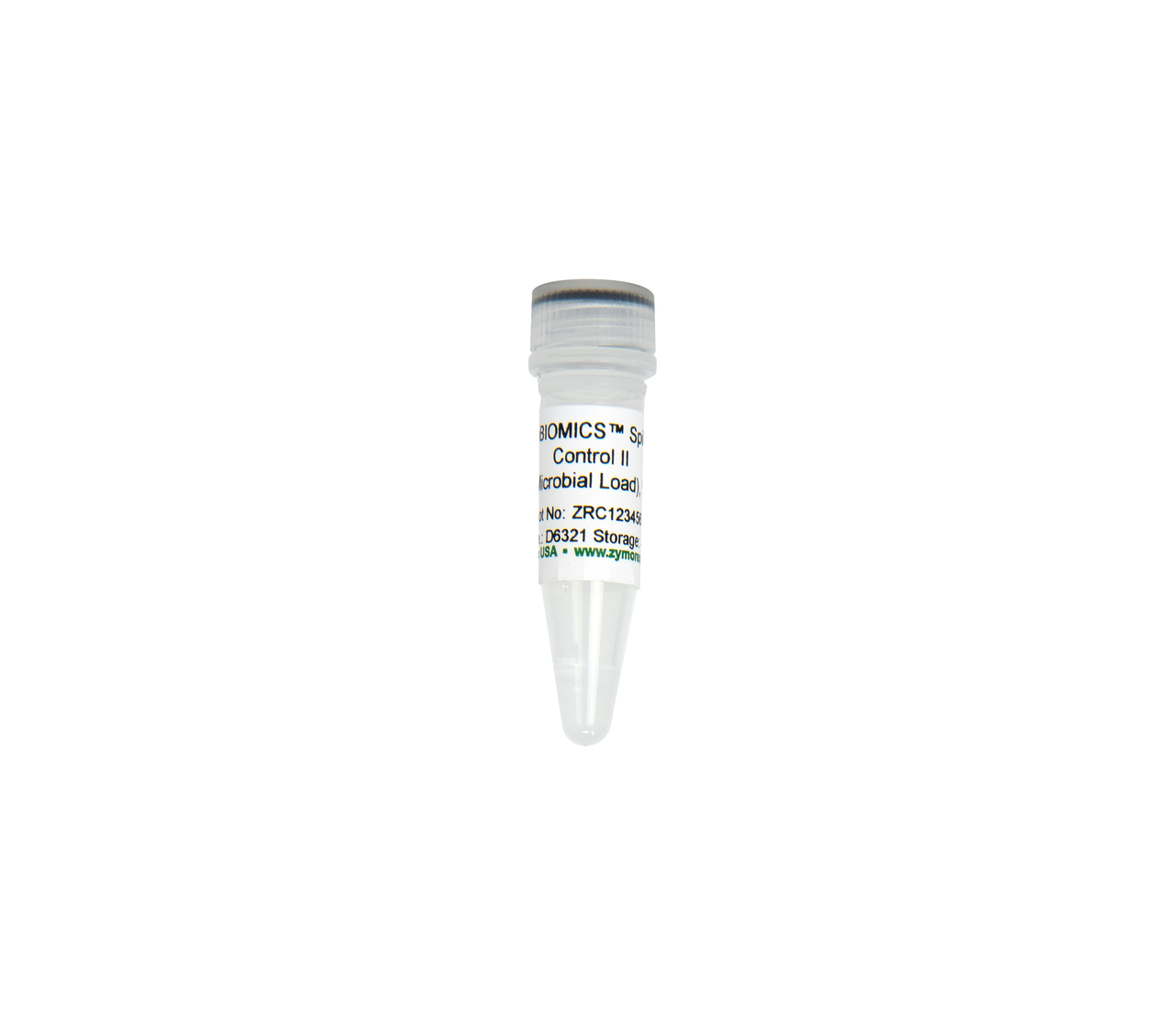
This listing is for catalog number D6321: ZymoBIOMICS Spike-in Control II, Low Microbial Load. Three bacteria make up the control: Gram-negative Imtechella halotolerans, Gram-positive Allobacillus halotolerans and Truepera radiovictrix, which resists lysozyme lysis and has very high GC content. Each poses a different challenge for extraction and NGS analysis. Cells are accurately counted and arranged in a log abundance distribution, so recovery across the three reveals both bias and quantitative range. Available in standard and 250-prep sizes. LIGHT LABS stocks the Zymo Research line, so kits, buffers and refills are always within reach.
Key Features
- Designed for low biomass – Tailored to samples with low microbial load.
- Three distinct challenges – Combines Gram-negative, Gram-positive and lysozyme-resistant high-GC strains.
- Log abundance distribution – Strains are present at log-stepped, accurately quantified cell numbers.
- Absolute quantification – Supports converting sequencing data to cell counts, including pathogen load.
- In situ control – Spiked directly into samples ahead of extraction.
Specifications
| Catalog Number | D6321 |
| Brand | Zymo Research |
| Description | ZymoBIOMICS Spike-in Control II, Low Microbial Load |
| Organisms | Truepera radiovictrix, Imtechella halotolerans (Gram-negative), Allobacillus halotolerans (Gram-positive) |
| Distribution | Log abundance, accurately quantified cell numbers |
| Sample load | Low microbial load |
| Pack sizes | Standard; 250 preps |
| Shipping Conditions | Ships at room temperature |
| Storage | -80°C |
Available Sizes & Components
Applications
- Pathogen load detection
- Low-biomass microbiome studies
- Absolute microbial quantification
- NGS extraction bias monitoring
- Clinical research microbiome QC


